
Workplace Utilization Data for Corporate Real Estate Leaders
Make Portfolio Decisions With Confidence - Backed by Real Usage Data

Why Corporate Real Estate Leaders Are Under Pressure
Corporate real estate leaders are being asked to do more with less: reduce costs, right-size portfolios, support return-to-office mandates, and plan for long-term workplace strategy - all while navigating uncertainty around how offices are actually used.
Common questions CRE leaders face include:
Where can we consolidate or exit leases without disrupting the business?
Are peak demand days driving our real space requirements?
How do we justify real estate decisions to finance and leadership with confidence?

The challenge is not a lack of intuition - it’s a lack of reliable, scalable utilization data across the portfolio. - it’s lack of objective behavioral data.
Most CRE decisions are still informed by:
-
Infrequent utilization studies
-
Sensor deployments with limited coverage
-
Booking data that doesn’t reflect real use
-
Anecdotal feedback from business units
These inputs don’t reflect how people actually move through and experience space.
InnerSpace gives workplace planners continuous visibility into real space behavior - so strategy and design decisions are grounded in evidence, not assumptions.
The KPIs Corporate Real Estate Leaders Own
CRE leaders are often accountable for KPIs such as:
Portfolio utilization rate
Peak vs. average occupancy
Cost per square foot (and cost per utilized square foot)
Space efficiency and density
Lease utilization and performance
Portfolio consolidation targets
Capital allocation effectiveness
Accurately tracking these KPIs requires behavior-based utilization data, not point-in-time counts.
Why Traditional Utilization Data Isn’t Enough for CRE
Legacy approaches to utilization create blind spots:
-
Manual studies are expensive and quickly outdated
-
Sensors are costly to deploy and limited to instrumented areas
-
Booking systems measure intent, not behavior
-
Badge swipes show entry, not sustained presence
As a result, CRE teams struggle to:
-
Benchmark performance across locations
-
Identify persistent underutilization
-
Distinguish structural trends from temporary fluctuations
-
Build defensible business cases for consolidation
How CRE Leaders Use InnerSpace Utilization Data
InnerSpace delivers high-fidelity workplace utilization data using existing enterprise Wi-Fi infrastructure. The data is anonymized, continuous, and normalized across locations—making it suitable for portfolio-level analysis.
CRE leaders use InnerSpace to:
-
Compare utilization across buildings, cities, and regions
-
Identify underperforming assets
-
Support lease exit, sublease, or consolidation decisions
-
Inform long-term portfolio planning
The InnerSpace Data That Drives CRE KPIs
Portfolio Utilization & Benchmarking
InnerSpace enables consistent utilization measurement across the entire portfolio.
KEY DATA POINTS:
-
Average and peak utilization by building and floor
-
Utilization trends over time
-
Variance in utilization across sites
KPI IMPACT:
-
Clear benchmarks for portfolio performance
-
Identification of assets that consistently underperform
-
Reduced reliance on one-off studies
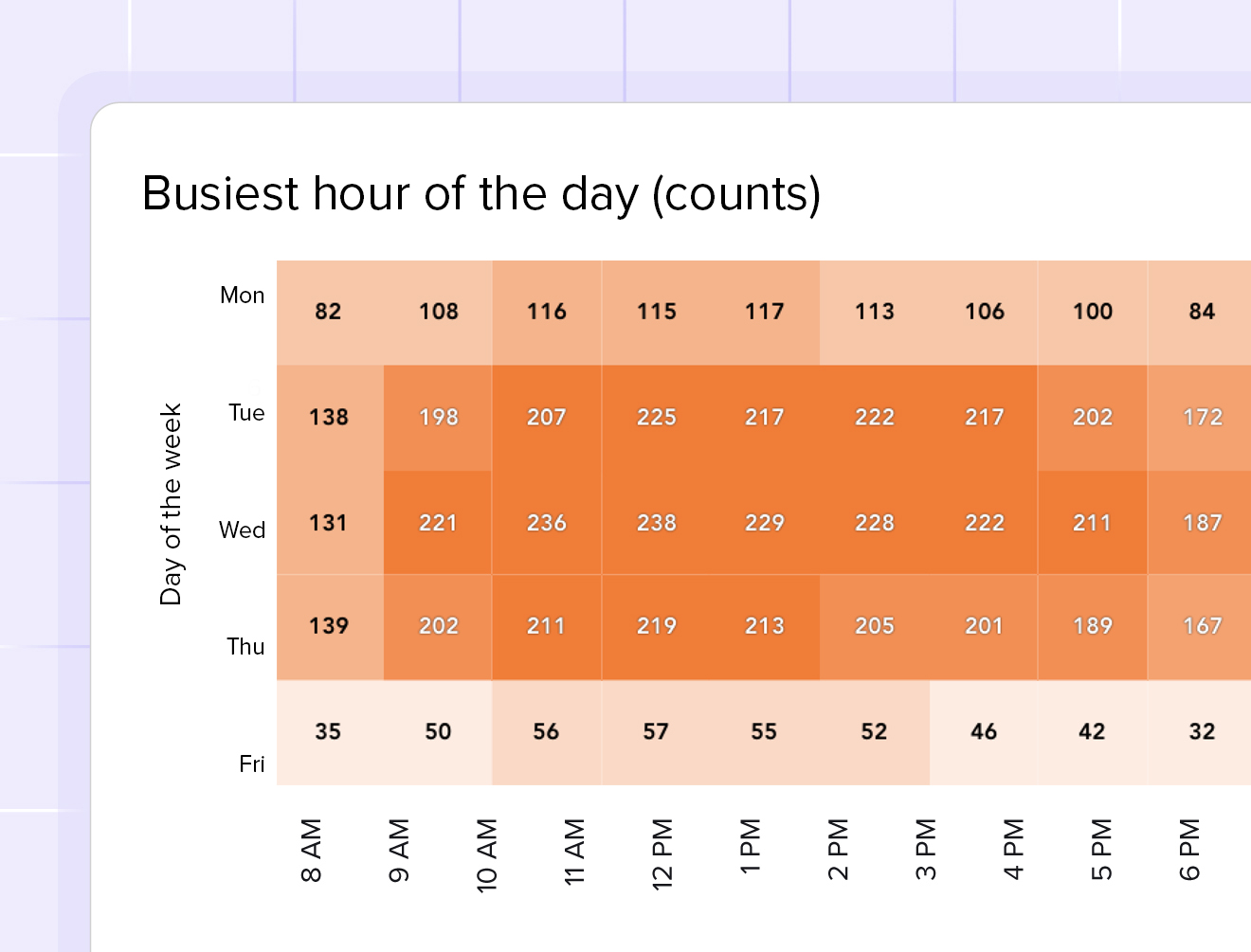
Peak Demand vs. Baseline Usage
CRE decisions are often driven by peak days - but average usage tells a different story.
KEY DATA POINTS:
-
Peak attendance days and hours
-
Average daily utilization
-
Day-of-week usage patterns
KPI IMPACT:
-
More accurate capacity planning
-
Avoid overbuilding for peak demand
-
Smarter density and seating strategies
Persistent Underutilization Analysis
InnerSpace distinguishes structural underutilization from seasonal or temporary fluctuations.
KEY DATA POINTS:
-
Longitudinal utilization trends
-
Frequency and duration of underuse
-
Comparison of intended vs. actual usage
KPI IMPACT:
-
Stronger evidence for consolidation
-
Reduced risk in lease exit decisions
-
Better long-term planning confidence
Cost Efficiency & Financial Alignment
InnerSpace utilization data pairs directly with cost data to improve financial clarity.
KEY DATA POINTS:
-
Utilized vs. leased square footage
-
Utilization-adjusted cost metrics
-
Before/after comparisons tied to changes
KPI IMPACT:
-
Shift from cost per square foot to cost per utilized square foot
-
Stronger ROI analysis
-
Better alignment with finance and leadership
The Strategic Role of CRE With Better Data
With continuous utilization data, CRE leaders move from reactive management to proactive strategy:
-
FROM ANECDOTAL FEDDBACK → PORTFOLIO TO WIDE EVIDENCE
-
FROM POINT-IN-TIME → ONGOING INSIGHT
-
FROM RISK-HEAVY DECISIONS → DEFENSIBLE, DATA-BACKED STRATEGY
InnerSpace allows CRE leaders to confidently answer not just how much space is leased, but how much space is actually needed.
Built for Enterprise Real Estate Portfolios
InnerSpace is designed to scale:
Portfolio-wide coverage without sensors
Consistent metrics across geographies
Privacy-first and compliance-ready
Continuous insight instead of snapshots
Why CRE Leaders Choose InnerSpace
Reduce portfolio costs with confidence
Identify consolidation opportunities earlier
Improve capital allocation decisions
Defend strategy with credible utilization data
Make Real Estate Strategy Defensible
InnerSpace gives CRE leaders the utilization intelligence required to optimize portfolios, reduce risk, and align real estate decisions with how work truly happens.
Would you like to learn more about how InnerSpace supports enterprise real estate strategy? Book some time with us and we would be happy to show you how.