

<img height="1" width="1" style="display:none;" alt="" src="https://px.ads.linkedin.com/collect/?pid=598321&amp;fmt=gif">
How InnerSpace Uses Enhanced Indoor Localization with

Predictive Hyperbolic LocationFingerprinting (pHLF)

phlf-top

Traditional Indoor Localization Struggles in Real-World Environments

Traditional triangulation methods for indoor localization, while foundational, often fallshort in complex indoor environments due to their reliance on line-of-sight signals andthe inherent variability of radio frequency propagation indoors.

Indoor Accuracy Is the Difference Between Insight and Noise

The accuracy of indoor localization impacts a wide array of applications, such occupancy tracking and space utilization services within large facilities. Traditional methods, such as triangulation (sometimes referred to a trilateration), have provided a baseline for indoor positioning. However, the dynamic nature of indoor environments, coupled with the limitations of these conventional methods, often leads to inaccuracies that can diminishthe user experience and affect operational efficiency.

Limitations of Traditional Triangulation

Triangulation methods calculate an object's location based on the geometric properties of triangles formed between the object and known points. This approach, while effective in open, unobstructed environments, encounters significant challenges indoors:

Multipath Interference

Signal reflection off surfaces causes multiple paths that canconfuse the triangulation process.

Non-Line-of-Sight Conditions

Obstructions like walls and furniture can significantlyattenuate or block signals.

Environmental Variability

Changes in the environment, such as the movement ofpeople or alterations in the layout, can affect signal strength unpredictably.

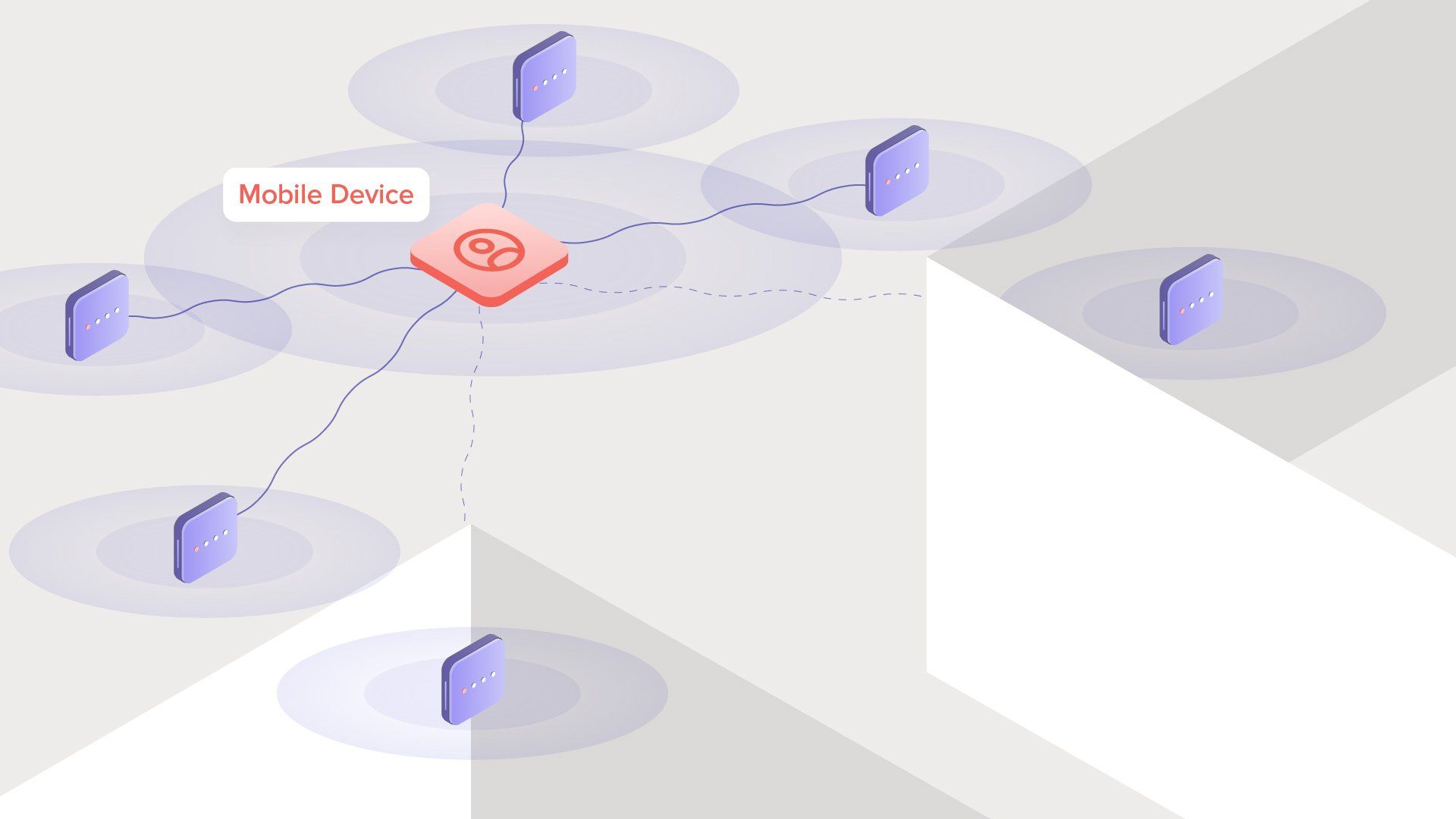
PHLF-diagrams_01

As we see in the image above, the device is attenuated by walls and other obstructions.

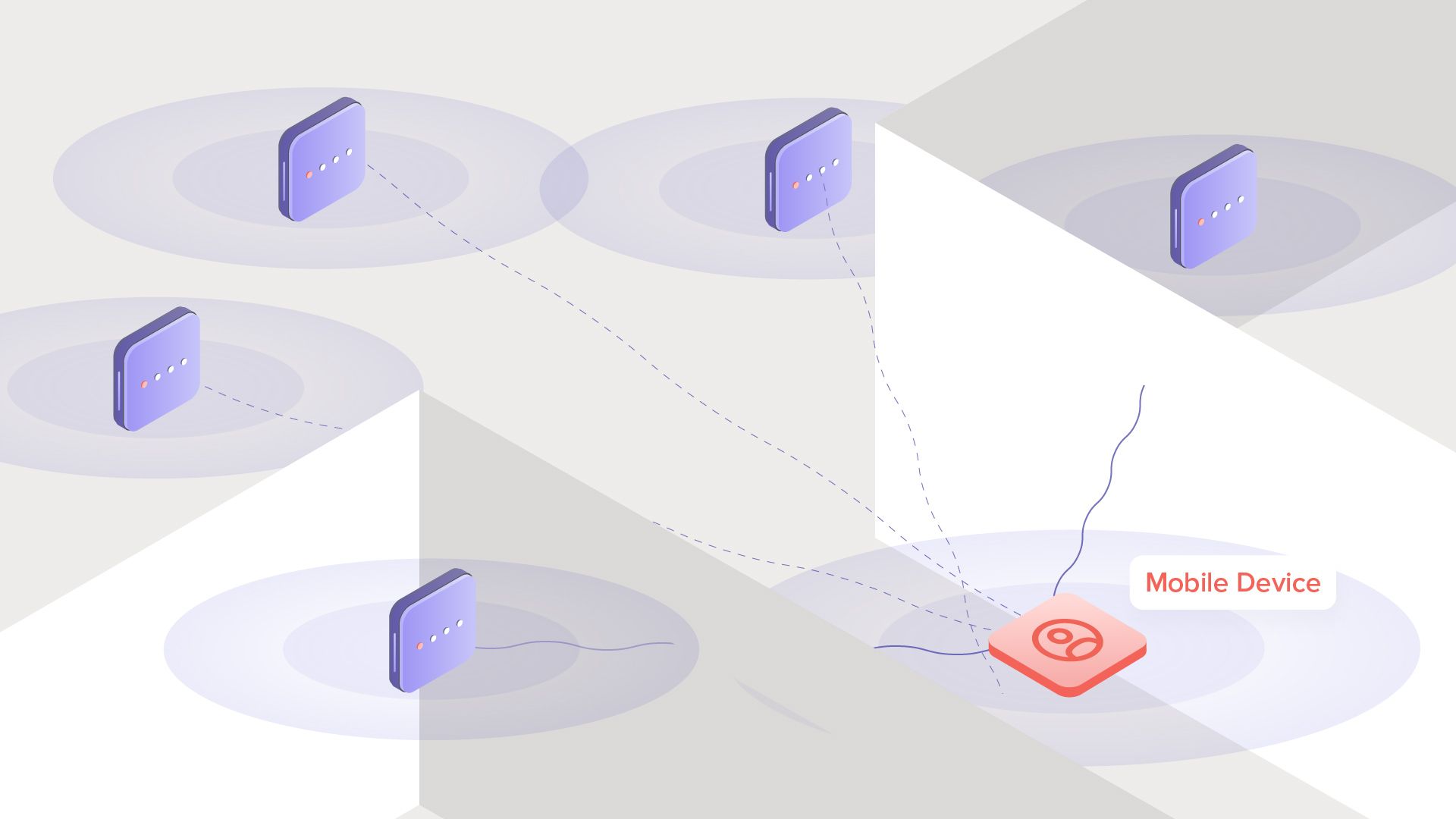
PHLF-diagrams_04 copy

As the device moves through space the signal is further attenuated, causing loss of location accuracy.

Predictive Hyperbolic Location Fingerprinting: A NovelApproach

InnerSpace leverages our patented Predictive Hyperbolic Location Fingerprinting (PHLF)technology to overcome these challenges.


This method employs a predictive model based on the Received Signal Strength Indicator (RSSI) from multiple fixedly-positioned sensor devices in a 2D environment. Key components of this approach include:

RSSI Value Collection

Gathering RSSI values from a network of stationary sensorsat known locations.

Fingerprint Generation

Creating both raw and log-ratio RSSI fingerprints forprecise location mapping.

Normalization and Fusion

Enhancing accuracy through the normalization andcombination of fingerprints into a comprehensive, predictive model.

Dynamic Adaptation

Continuously updating fingerprints to reflect changes in theenvironment, ensuring high accuracy over time.

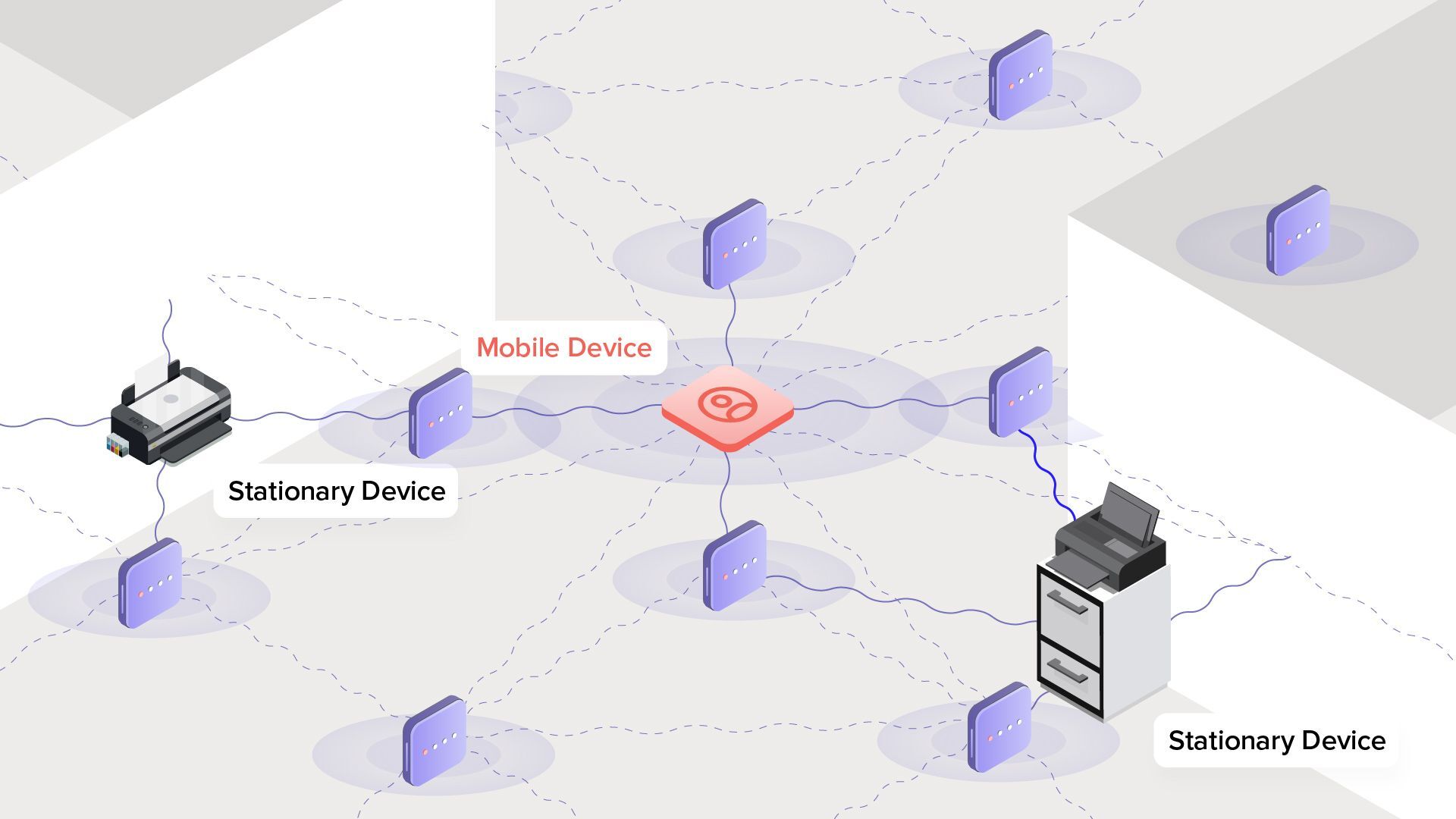
PHLF-diagrams_03-1

What is an RSSI Fingerprint?


Signal strengths between Wi-Fi access points and devices vary depending on where they are located. The learning algorithm interprets these strengths and locates the device despite a noisy signal environment. Areas with weak signal strengths are accounted for through the use of stationary devices. Once the environment is calibrated, an RSSI fingerprint is established.

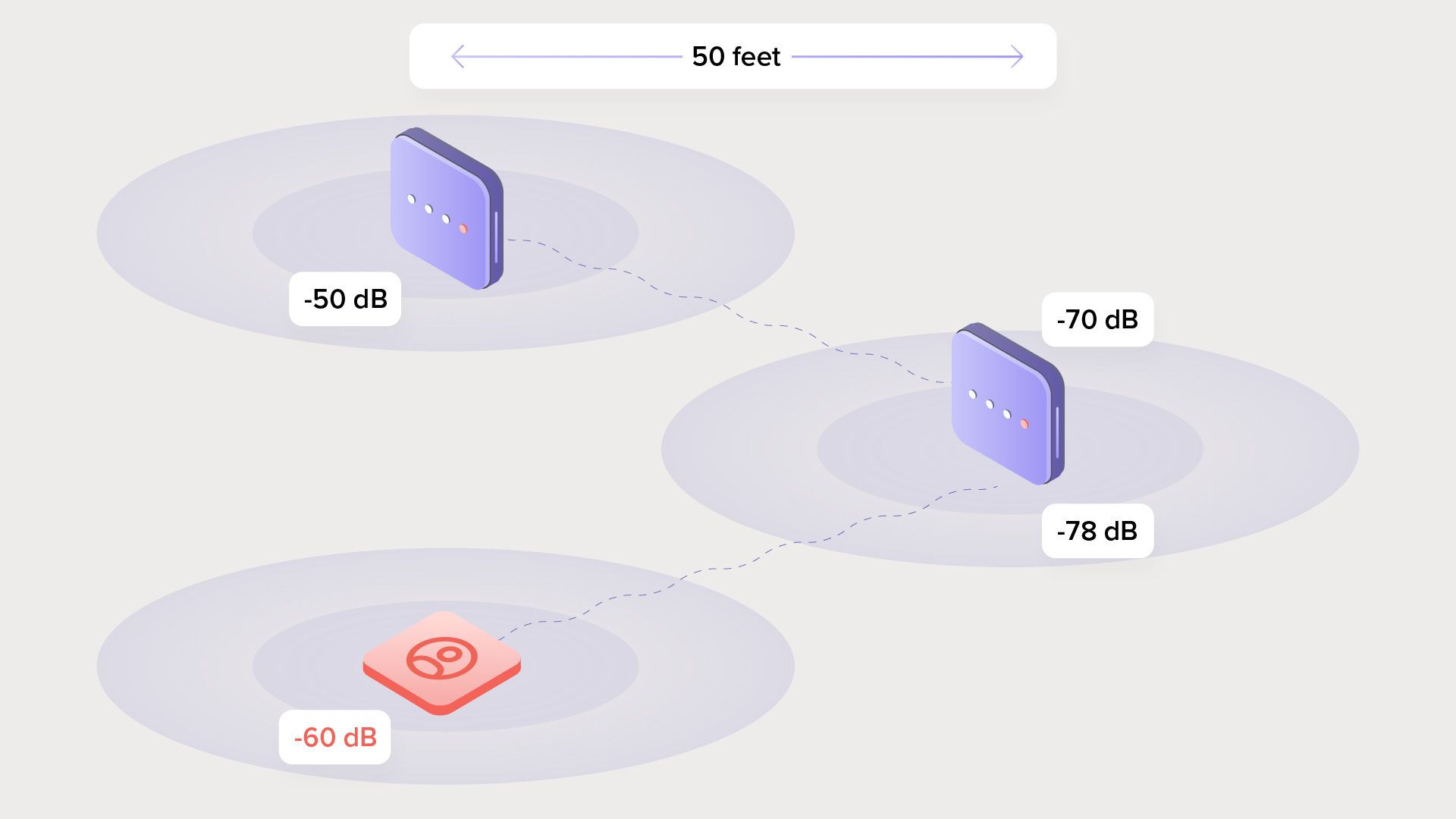
Prediction


Signal loss over distances are predicted, for example over a 50 foot radius, a device is shown to attenuate at a lesser signal than the original output.

PHLF-diagrams_04-1

Advantages Over Triangulation

Predictive HLF (pHLF) offers significant advantages over traditional triangulation methods:

Improved Accuracy

By utilizing RSSI fingerprints and predictive modeling, HLF can more accurately determine locations in complex environments.

Stability in Dynamic Environments

The method's predictive nature allows it toadapt to environmental changes, maintaining high accuracy where triangulationmethods might falter.

Scalability

pHLF can be efficiently implemented in large-scale environments, utilizing existing WiFi infrastructure without the need for extensive additional hardware.

Implementation and Use Cases

InnerSpace's Predictive HLF (pHLF) technology is versatile, supporting a range of applications:

Occupancy Insights

Providing data to identify how many people are in a space,plus the occupancy percentage in terms of the space’s capacity.

Utilization Data

Data that provides information on the number of minutes a spacewas occupied by more than one person divided by the total time the space wasoccupied.

Groups

Providing data on how groups and teams use spaces.

Dwell time

Identifying how long people stay in a space.

Pathways

Identifying the flow of traffic between indoors spaces.

Accuracy

Formal testing was conducted with our partner Arista. We tested a device under severalconditions that it would experience in a real world scenario:

The device being located had a clear line of sight to all 4 APs (good conditions).

The device being located had clear line of sight to none of the 4 APs (not as goodcondition, as signal attenuation is introduced).

The device being located had a clear line of sight to some but not all APs (worst caseconditions).

Under Scenario 1


We achieved 1.3M accuracy, 90% of the time. This means that 90% of the locations predicted were within 1.3M of the ground truth. 99% of the results were within 1.6M of the ground truth. The average error for all tests run in these conditions was 88 +/- 5 cm.

Under Scenario 2


Our approach achieved 2M accuracy, 90% of the time. If we look at the 99th percentile results, performance dropped off to 4.5M accuracy. However, across all the tests run under scenario 2 conditions, the average error was 1.5M +/- 10cm.

Under Scenario 3


Our approach performed the worst of all conditions as expected, achieving 5.5M accuracy 90% of the time, with an average error across all tests in the scenario at 4.7M +/-12cm.

Given the average of all the test conditions we conservatively estimate 2M accuracy, 90% of the time.

InnerSpace Core Architecture

OverflowSpace

Indoor Localization, Re-engineered for the Real World

Predictive Hyperbolic Location Fingerprinting represents a significant advancement inindoor localization technology. By addressing the limitations of traditional triangulationmethods, InnerSpace's approach ensures more reliable, accurate, and scalable indoorpositioning solutions. This technology not only enhances operational efficiency andsafety but also opens new avenues for innovation in indoor services and analytics.

Want to see InnerSpace in action?

Watch a demo to see how InnerSpace delivers deep space utilization insights, beyond simple head counts, to drive meaningful workplace transformation and help your teams thrive.